Property management fees NZ look simple until you read the quotes. One company advertises a low percentage. Another includes more services at a higher rate. A third adds charges you only spot in the fine print. So how do you know what’s fair?
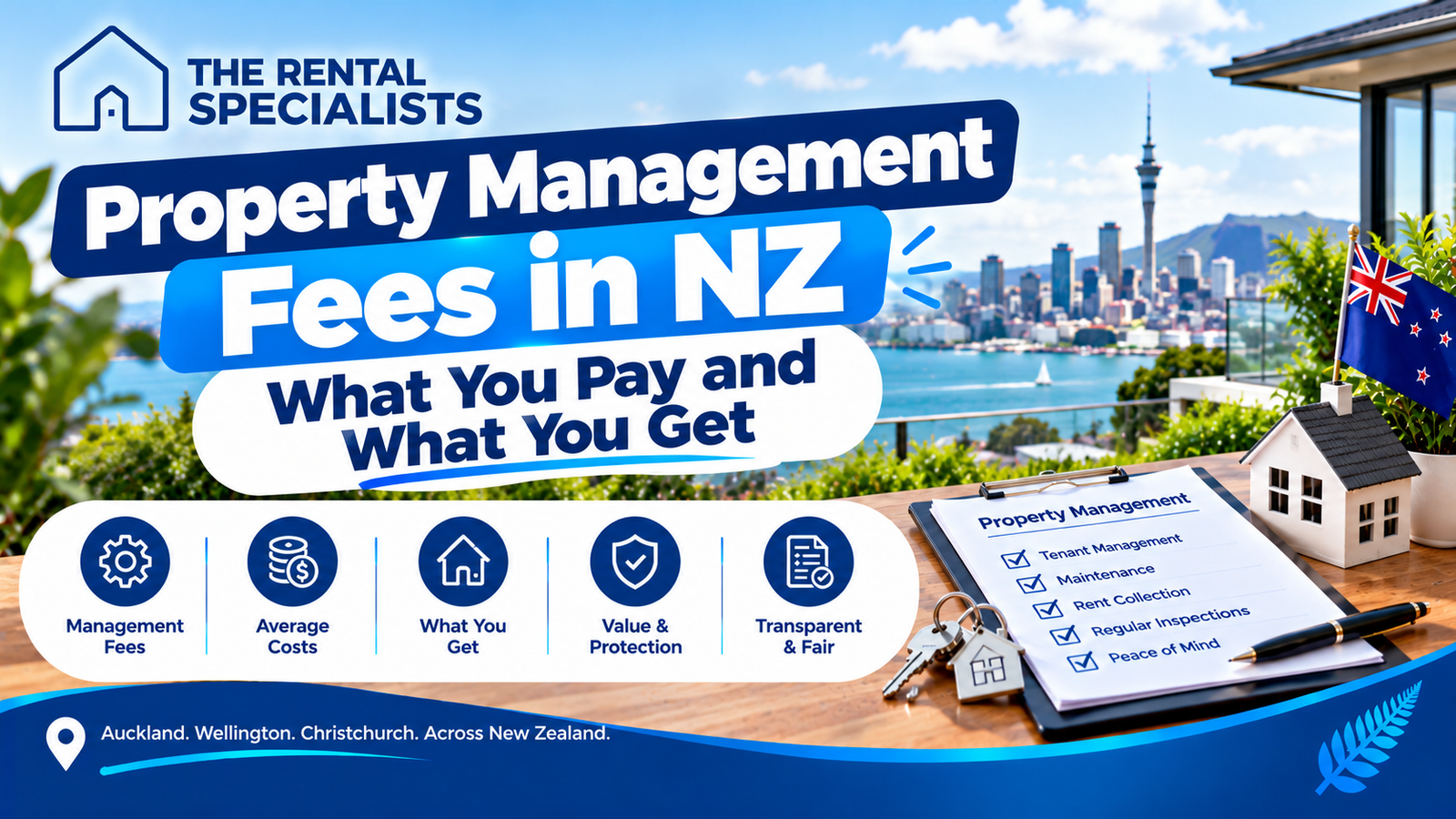
Most NZ property managers charge a management fee of around 7% to 10% of the rent collected, plus GST, with a separate letting fee when a new tenant moves in. Rates vary by company, region and service level. This guide explains how fees work, what they cover, which extras to watch for and how to compare quotes properly.
At a glance
- Most managers charge a percentage of the rent, plus GST.
- A letting fee is usually charged to the landlord when a new tenancy starts.
- Inspections, maintenance and renewals may be included or billed separately.
- The cheapest percentage isn’t always the cheapest option once extras are added.
How Property Management Fees Work in NZ
Fees aren’t standardised across the industry, which is why quotes are hard to compare. Most companies use one of two models.
Percentage-Based Fees
This is the most common structure. The manager takes a percentage of the rent collected, so the fee rises and falls with your rent. A higher rent means a higher fee, but the work involved often stays much the same.
Fixed Fees
Some companies charge a flat weekly or monthly amount, whatever the rent. This can suit higher-rent properties because the fee doesn’t grow with the rent. Check what the flat fee covers, though. Some fixed-fee packages include fewer services than a percentage-based one.
What’s Included in the Management Fee
A clear fee should come with a clear scope. As a rule, a standard management service covers:
- Tenant sourcing: marketing the property, arranging viewings and collecting applications.
- Tenant screening: checking references, rental history and the details on each application. Our guide to tenant screening in NZ explains this stage.
- Rent collection: tracking payments and following up quickly on arrears.
- Routine inspections: regular checks that catch small problems early. Our rental property inspection checklist shows what a thorough one covers.
- Maintenance coordination: arranging repairs with tradespeople and keeping records.
- Compliance support: helping you keep up with the Residential Tenancies Act, Healthy Homes Standards and smoke alarm requirements.
- Financial reporting: regular owner statements and an end-of-year summary.
If one of these is missing from a quote, ask why. Then ask what it would cost to add it.
Typical Fees and Extra Charges
The management percentage is only one line on the bill. Here’s what else you may see, and what to ask about each charge.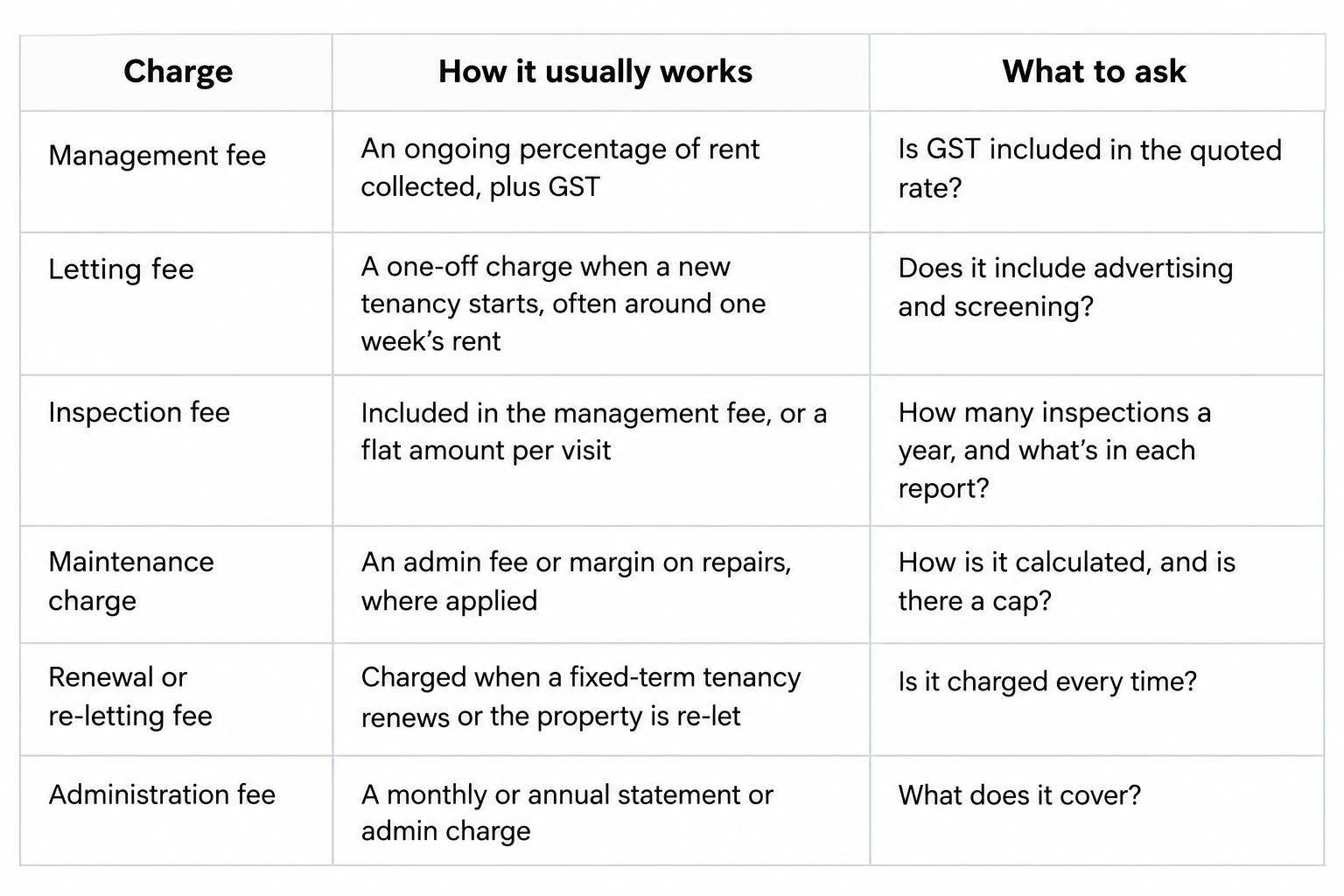 Not every company charges every fee. Some bundle services into one rate, while others itemize them.
One rule is worth remembering. Letting fees can’t be charged to tenants in New Zealand. If a letting fee applies, it falls on the landlord, so check it in your quote.
How to Work Out Your Yearly Cost
You can estimate the ongoing cost yourself:
Weekly rent × 52 × management fee percentage = yearly management fee
Here’s an illustrative example, using a round rent figure rather than a market price:
- Weekly rent: $600
- Yearly rent: $600 × 52 = $31,200
- Management fee at 8%: $2,496 a year, plus GST
- Add a letting fee, if a new tenancy starts, and any inspection or admin charges
Run the same sum on every quote. That gives you a like-for-like figure, and it shows quickly when a low percentage is hiding extra charges.
Hidden Costs to Watch For
Most surprises come from charges that weren’t explained upfront. Watch for:
- Unclear letting costs: advertising or tenant-placement charges that aren’t in the headline rate.
- Per-visit inspection fees: these add up if inspections are frequent.
- Maintenance margins: a markup on tradesperson invoices that isn’t disclosed.
- Renewal fees: charged each time a fixed term rolls over.
- Vague spending limits: no clear cap on what the manager can spend on repairs without your approval.
Get the fee schedule in writing, and ask for the agreement before you commit. If a company is vague about any of these, treat it as a warning sign.
Cheap vs Premium: What Does Good Value Look Like?
A low percentage can look attractive, but it only tells you what you pay, not what you get. A cheaper package might include fewer inspections, slower communication or extra charges for basic tasks. A higher-priced one might cover more.
Here’s a simple way to compare:
- Scope: what’s included in the fee, and what costs extra?
- Screening: how are tenants checked before they move in?
- Inspections: how often do they happen, and how are they reported?
- Response time: how quickly will you hear back about repairs or arrears?
- Total cost: what does the full year cost once extras are added?
Poor screening, slow repairs and long gaps between tenants can all cost more than a slightly higher fee. That doesn’t mean you should always pay more. It means you should compare the whole package, not just the percentage. If you’re weighing up the cost of doing it yourself, see our guide to self-managing vs a property manager in Auckland.
Property Management Fees in Auckland
Auckland fees generally follow the same structure as the rest of New Zealand, and the same rules apply to letting fees and GST. Our detailed breakdown is in Property Management Auckland: How Much Does It Cost?
Local guides can also help if you want area-specific advice. See our guides to property management in East Auckland, Manukau and Manurewa.
Questions to Ask Before You Choose a Manager
Before you sign, ask each company:
- What does the management fee include, and what costs extra?
- What is the letting fee, and when is it charged?
- How much can you spend on repairs without my approval?
- How often will I receive statements and inspection reports?
- What are the contract term and the exit terms?
For a fuller checklist, read our guide on how to choose a residential property management company.
Frequently Asked Questions About Property Management Fees in NZ
Q1. What is the normal percentage for property management in NZ?
Most managers charge around 7% to 10% of the rent collected, plus GST. Some fall outside that range, depending on the company, the property and the service level.
Q2. Are property management fees charged plus GST?
Management percentages are usually quoted excluding GST, so confirm this in writing. The difference adds up over a year.
Q3. Who pays the letting fee?
The landlord does. Letting fees can’t be charged to tenants in NZ.
Q4. Can landlords negotiate property management rates?
Sometimes. It’s worth asking, especially if you have more than one rental or a long-term arrangement. Be cautious if a company drops its fee sharply without explaining what’s being removed from the service.
Q5. Are property management fees tax deductible in New Zealand?
In most cases, yes. Property management fees are generally an allowable expense against your rental income. Your situation may differ, so check with Inland Revenue or your accountant.
Conclusion: Compare the Full Cost, Not Just the Percentage
Property management fees in NZ are easier to judge once you break them down. The management percentage is only the starting point. What really matters is what’s included, which extras are billed separately and how the total looks over a full year.
Before you sign, ask for a written fee schedule, check whether GST is included and run the same yearly calculation on every quote. A slightly higher fee with clear inclusions can be better value than a low rate with extra charges. Either way, the goal is the same: no surprises, and a service that protects your rental income.
If you’d like to see what your property could earn, request a free rental appraisal. You can also contact The Rental Specialists or message us on WhatsApp to talk through your options.