
Ending a Periodic Tenancy in NZ: What You Need to Know First
A periodic tenancy notice is the written notice a tenant or landlord gives to end a tenancy that has no fixed end date. In New Zealand, how much notice you need depends on who is ending the tenancy and why. Tenants generally give 21 days. Landlords generally give 90 days, or 42 days in specific legal situations. A mistake with the length, the wording or the delivery can cause delays and disputes. This guide explains the notice periods, how to give notice correctly and where fixed-term tenancies fit in. It covers ending a standard residential tenancy by notice, so boarding house tenancies and other routes, such as Tenancy Tribunal applications, aren’t included. For the official rules, see Tenancy Services’ guidance on ending a periodic tenancy.
What Is a Periodic Tenancy Notice?
A periodic tenancy has no fixed end date. It simply rolls on until the tenant or the landlord ends it by giving written notice. That notice is what we mean by a periodic tenancy notice.
A tenant gives notice when they plan to move out. A landlord gives notice when they want the tenancy to end, for example because the owner wants to move in or the property has been sold with vacant possession required. The rules differ for each, and the next section sets them out.
Notice has to be in writing, and it has to show the correct end date. Together, those two things give both sides a clear record of when the tenancy finishes.
What Is the Notice Period for a Periodic Tenancy in NZ?
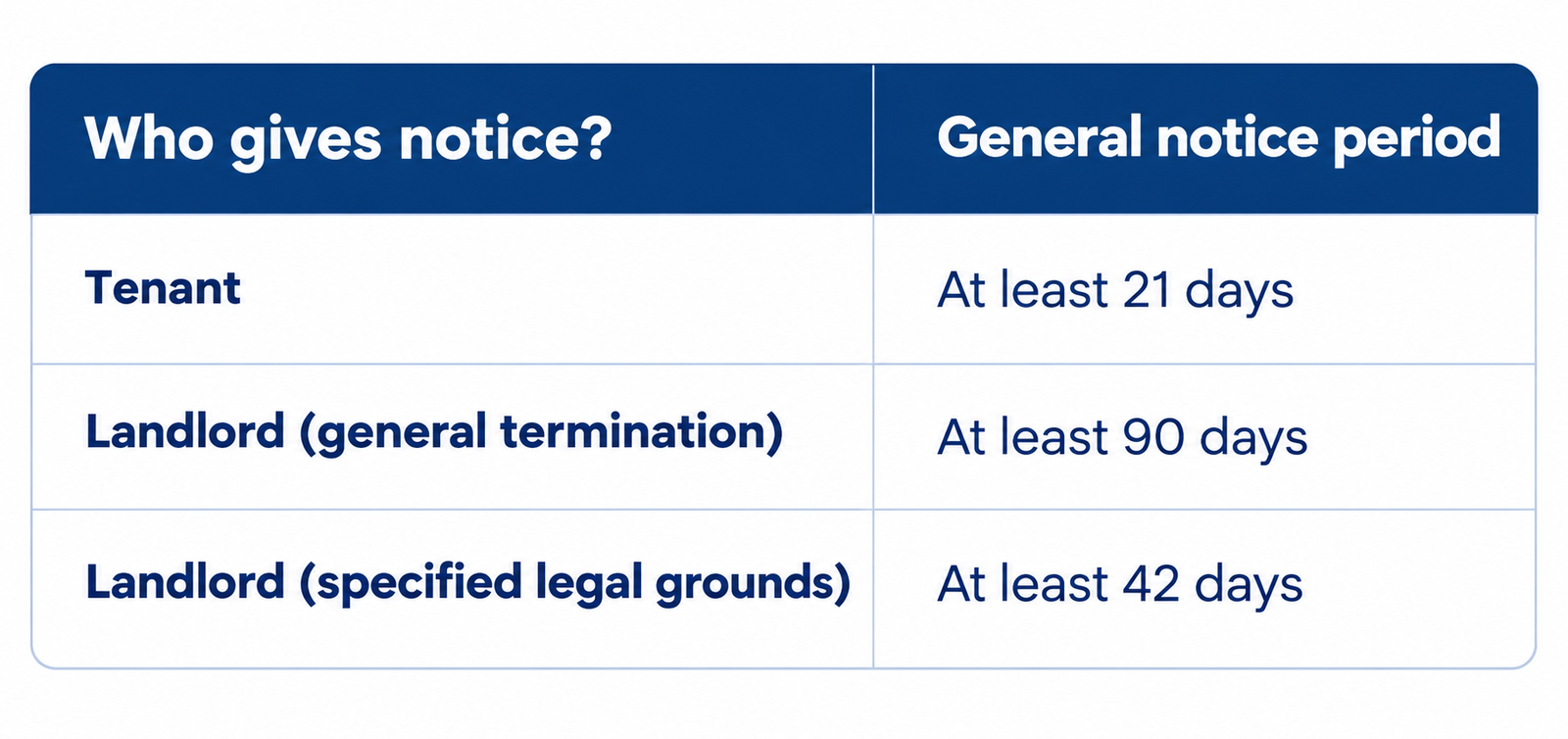
The periodic tenancy notice period depends on who is giving notice. These are the general rules under current New Zealand law:
How Much Notice Must a Tenant Give?
A tenant must give at least 21 days’ written notice to end a periodic tenancy. The landlord can agree to a shorter period, and that agreement should be in writing.
Two points catch tenants out. If a landlord gives 90 days’ notice and the tenant wants to leave sooner, the tenant still has to give at least 21 days’ written notice. And when several tenants are named on the agreement, written notice from one of them ends the tenancy for all of them.
How Much Notice Must a Landlord Give?
A landlord can end a periodic tenancy with at least 90 days’ written notice and doesn’t have to give a reason. The notice can’t be given in retaliation, for example because a tenant exercised their rights. Giving notice correctly is also part of your wider landlord responsibilities in NZ.
A landlord can’t simply choose the shorter 42-day period. It’s only available for the specific reasons below.
When Can a Landlord Give 42 Days’ Notice?
A landlord can give 42 days’ notice in three situations:
- The owner or a family member needs the home. They need it as their main residence, will move in within 90 days of the tenancy ending and will live there for at least 90 days.
- Employee or contractor accommodation. The property is usually used by the landlord’s employees or contractors, or was acquired for that purpose. This must have been clearly stated in the tenancy agreement, and the landlord must need the property for them.
- A sale with vacant possession. The property has been sold under an unconditional sale and purchase agreement that requires vacant possession.
If a landlord gives less than 90 days’ notice, the notice must state the reason for ending the tenancy.
How to Give Notice to End a Periodic Tenancy
Getting the content and delivery right matters as much as getting the length right.
What Must a Written Notice Include?
Every notice to end a periodic tenancy must:
- Be in writing
- Give the address of the tenancy
- Give the date the tenancy is to end
- Be signed by the person giving notice
A landlord using a 42-day notice must also state the reason. Tenancy Services provides 90-day, 42-day and tenant-to-landlord notice templates, which make it easier to include everything.
When Does the Notice Period Start?
Notice periods for ending a tenancy are counted in calendar days, not working days. The period starts the day after the notice is considered received, and when that is depends on how you deliver it.
Working days only matter when you’re working out when the notice counts as received. After that, count calendar days. For example, if you hand over a 21-day notice on the 1st of the month, it’s received that day, the notice period starts on the 2nd, and the earliest end date is the 22nd. Make sure the end date on your notice allows the full notice period.
How Should You Serve the Notice?
You can serve notice in these ways:
- Hand it to the other person
- Put it in the letterbox of the physical address for service
- Attach it clearly to the door of the property
- Post it to the address or PO box for service
- Send it to the electronic address for service in the tenancy agreement
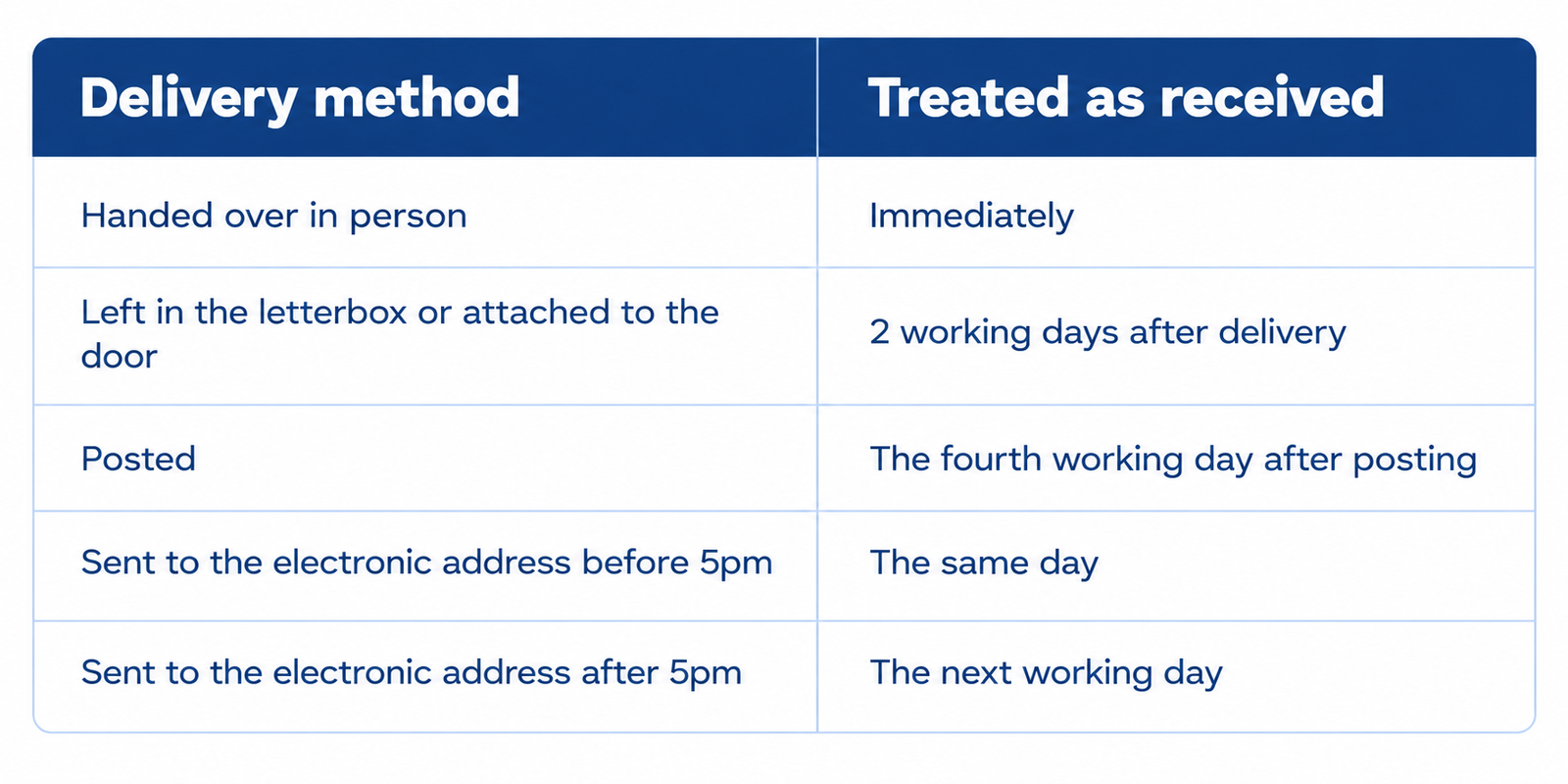
Check the address for service in the agreement first. The other person hasn’t been notified until they receive the notice, so the law sets timeframes for when it counts as received. Tenancy Services’ serving notices guide sets them out:
Keep a copy of the notice and evidence of how and when you served it, such as proof of postage or a dated email. If there’s a disagreement about when the notice was received, that evidence matters.
What Happens If a Fixed-Term Tenancy Becomes Periodic?
A fixed-term tenancy usually becomes periodic once the fixed term ends. It happens automatically unless the correct notice is given or the parties agree to renew or extend the term. A short fixed-term tenancy of 90 days or less is the exception. It doesn’t become periodic unless both sides agree to continue it.
To stop a fixed-term tenancy rolling on, either the tenant or the landlord can give notice between 90 and 21 days before the fixed term ends. No specific reason is required. This window applies to the end of the fixed term only. Once the tenancy has become periodic, the notice periods covered above (21, 90 and 42 days) apply instead.
For a broader comparison of the two tenancy types, read our guide to fixed term vs periodic tenancy in NZ.
Common Mistakes When Ending a Periodic Tenancy
A few errors come up often:
- Using an outdated notice period. The rules changed in January 2025, so check the date on any guidance you rely on.
- Giving notice verbally or informally. A phone call or a casual message isn’t enough. The notice must be in writing, include the required details and be signed.
- Getting the date or details wrong. A notice that’s missing the address, signature or end date doesn’t meet the requirements. Remember, the notice period starts the day after it’s received, not the day you send it.
- Assuming 42 days works for any reason. It applies only to the specific situations listed above. Otherwise, a landlord needs to give 90 days.
Frequently Asked Questions
Q1. How Much Notice Is Needed to End a Periodic Tenancy in NZ?
Tenants generally give at least 21 days’ written notice. Landlords generally give at least 90 days’ written notice, or at least 42 days in specific situations such as an owner moving in or a sale with vacant possession.
Q2. How Much Notice Does a Tenant Need to Give to End a Periodic Tenancy?
A tenant needs to give at least 21 days’ written notice. The landlord can agree to a shorter period, ideally in writing. If the landlord has given 90 days’ notice and the tenant wants to leave sooner, the tenant still needs to give at least 21 days’ notice.
Q3. How Many Weeks’ Notice Is Required for a Periodic Tenancy in NZ?
For a tenant, 21 days is three weeks. A landlord generally has to give at least 90 days, which is just under 13 weeks. Where a specific ground applies, such as an owner moving in, a landlord can give at least 42 days, which is six weeks.
Q4. Does a Tenant Need to Give Written Notice to End a Periodic Tenancy?
Yes. The notice must be in writing, show the address of the tenancy and the date the tenancy ends, and be signed. Keep a copy, along with evidence of when and how you delivered it.
Need Help Managing a Rental Property in Auckland?
Ending a tenancy properly takes accurate records, correct notices and clear communication. At The Rental Specialists, we help Auckland landlords manage their tenancies from tenant screening through to the end of the tenancy, so the paperwork and timing stay on track. Learn more about our property management in Auckland, or contact us to book a property management consultation. For legal questions about a specific situation, check the official guidance or get independent advice.
This guide is general information, not legal advice. Rules can change, so check the current guidance on Tenancy Services before giving notice.