Meth Contamination in NZ Rentals: What Landlords Need to Know First
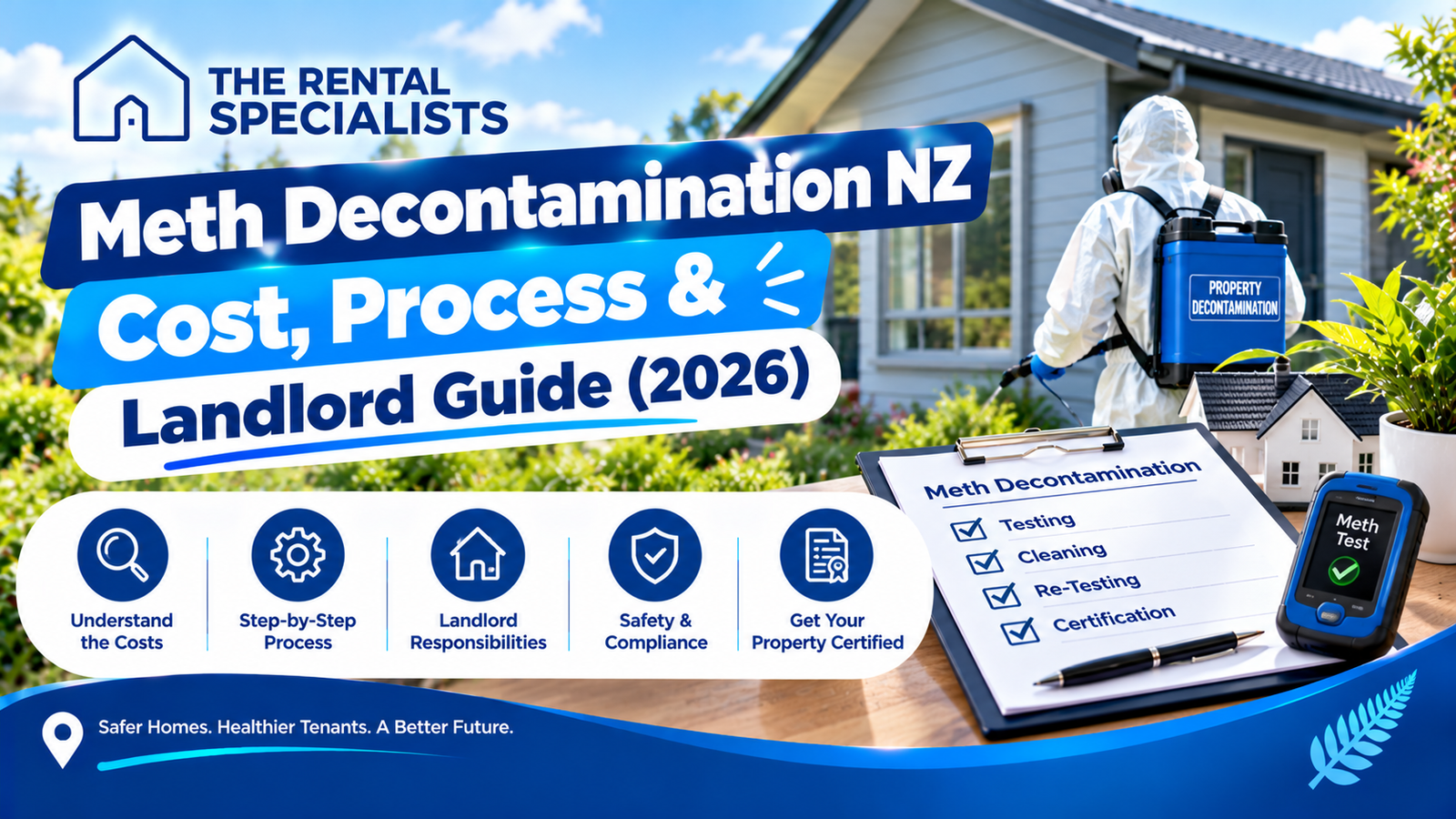
If you rent out a home in New Zealand, it pays to understand meth decontamination before a problem appears. Since 16 April 2026, clear legal levels decide when a rental needs testing, cleaning or even an end to the tenancy. This meth decontamination NZ guide explains what the 2026 rules mean for landlords and rental property owners: when to test, how the process works, what it can cost and how it fits with your wider landlord responsibilities in NZ. It’s based on current Tenancy Services guidance.
What Is Meth Decontamination?
Meth decontamination is the process of cleaning or removing contaminated materials until meth residue is at or below the legal limit. Testing then confirms that the cleaning worked.
What Is Methamphetamine Contamination in a Rental Property?
Methamphetamine is a Class A controlled drug. When it’s smoked or manufactured in a property, residue can settle on surfaces and soak into materials such as carpets, curtains and other soft furnishings. Tenancy Services says residue from meth use or manufacture can contaminate a property and may make it unfit to live in.
You can’t rely on sight or smell to judge contamination. Testing is the only way to know whether residue is present and how much there is.
Meth Contamination vs Meth Lab Contamination
Meth use and meth manufacture are different, and the rules treat them differently. Smoking meth leaves residue from the smoke. Manufacturing involves making the drug, which can spread contamination more widely.
The difference matters for testing. If Police or a local council tells a landlord that meth was likely manufactured at the property, detailed testing is compulsory. In other situations, a screening result starts the process. A positive test on its own doesn’t tell you which of the two happened, so avoid drawing conclusions about the tenant or the previous occupants.
What Are the NZ Meth Contamination Standards in 2026?
The Residential Tenancies (Managing Methamphetamine Contamination) Regulations 2026 (the 2026 Regulations) set the levels landlords have to work to. They’re measured in micrograms of meth per 100 square centimetres (µg/100 cm²).
Understanding Meth Contamination Levels in NZ
Two levels matter, 15 and 30 µg/100 cm²: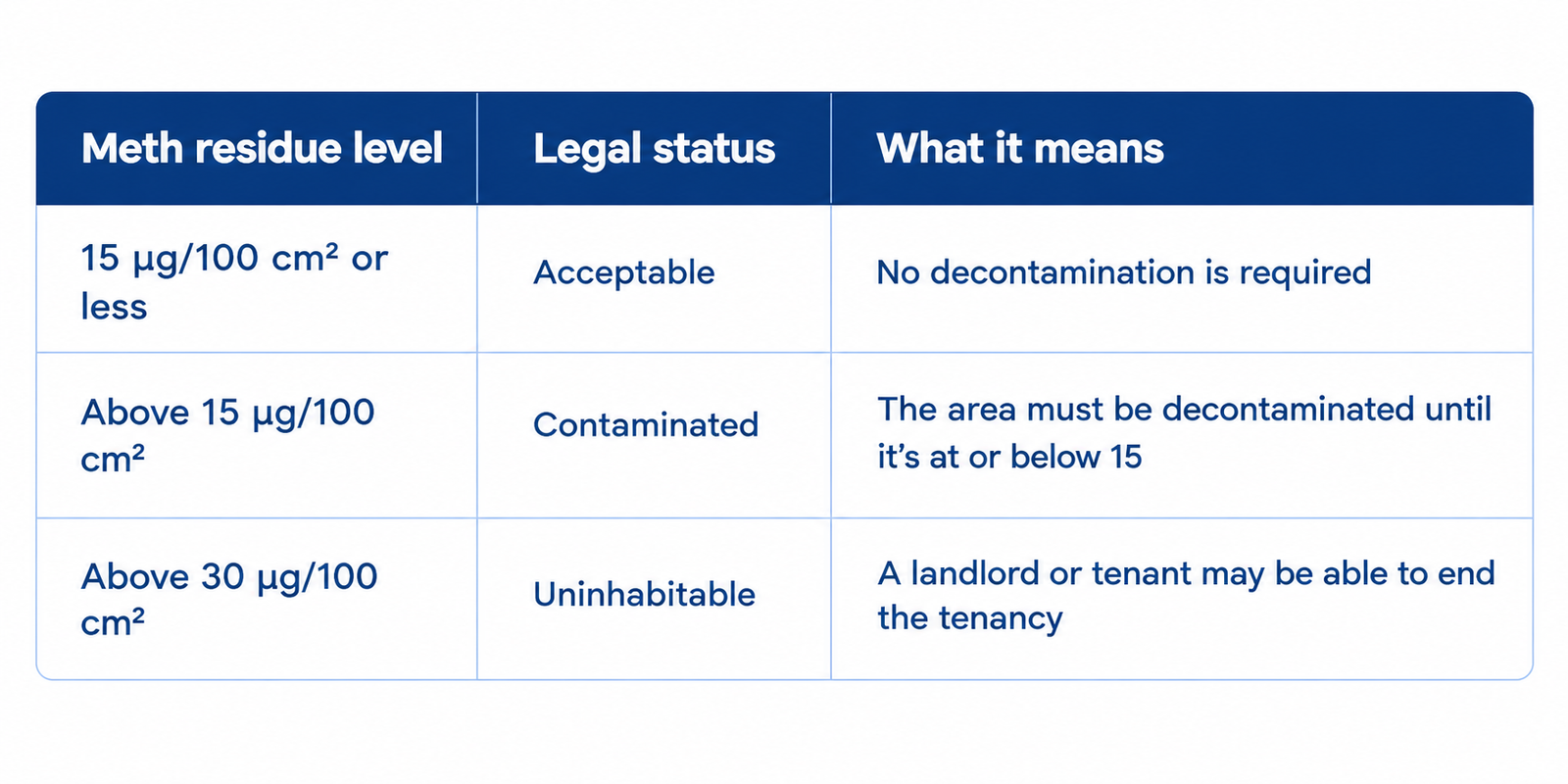 Contamination is determined room by room. If a bedroom is above 15 µg/100 cm² but the kitchen is below it, only the bedroom needs to be decontaminated. A screening result alone doesn’t settle the question. It shows whether detailed testing is needed.
When Can a Rental Property Be Considered Uninhabitable?
A property is uninhabitable if any part of it tests above 30 µg/100 cm². In that case, the landlord and the tenant can usually end the tenancy. A landlord can give 7 days’ notice and a tenant can give 2 days’ notice, as long as the person giving notice isn’t at fault for the contamination.
There’s an important exception. If the contamination is only in a “remote and inconsequential” part of the property, neither side can end the tenancy immediately. An area counts as remote and inconsequential only if it’s physically separate or can be closed off to stop contamination spreading, and the rest of the home can still be reasonably used as a residence. The rent must be reduced to reflect the lost access, and either party can ask the Tenancy Tribunal to end the tenancy.
What Changed Under the 2026 Meth Regulations?
The 2026 Regulations took effect on 16 April 2026. Before that, many landlords relied on the much lower 1.5 µg/100 cm² figure in NZS 8510:2017. The key points under the new rules are:
- Legal levels of 15 and 30 µg/100 cm² now apply.
- Only approved testing methods count for a valid screening assessment or detailed test.
- Detailed testing is compulsory in specific situations.
- Landlords have to give existing tenants test results within 7 days.
- Testing between tenancies isn’t required.
If you hold an older report that used the 1.5 figure, ask a qualified professional how it applies under the current rules. Check the current legislation and Tenancy Services guidance before acting on any threshold.
When Should Landlords Arrange Meth Testing?
Landlords aren’t required to test between tenancies, though they can choose to. Testing becomes compulsory only in the situations below.
Signs and Situations That May Require Further Assessment
Detailed testing is required if either of these applies:
- Police or a local council tells you meth has likely been manufactured at the property.
- A valid screening assessment shows at least one area above 15 µg/100 cm² and you’re made aware of the result.
Other situations may lead you to test voluntarily, such as a purchase, a change of tenancy or a well-founded concern. A strange smell, a stain or a tenant’s behaviour isn’t proof of contamination. These signs might prompt you to test, but only a valid test result can confirm a problem.
Screening Assessment vs Detailed Meth Testing
A screening assessment detects whether meth residue is present and shows if detailed testing is needed. Anyone can carry one out, including landlords and tenants, provided they use an approved method and follow its instructions.
Detailed testing confirms how much contamination there is and where, and whether decontamination is needed. Only qualified professionals can do it.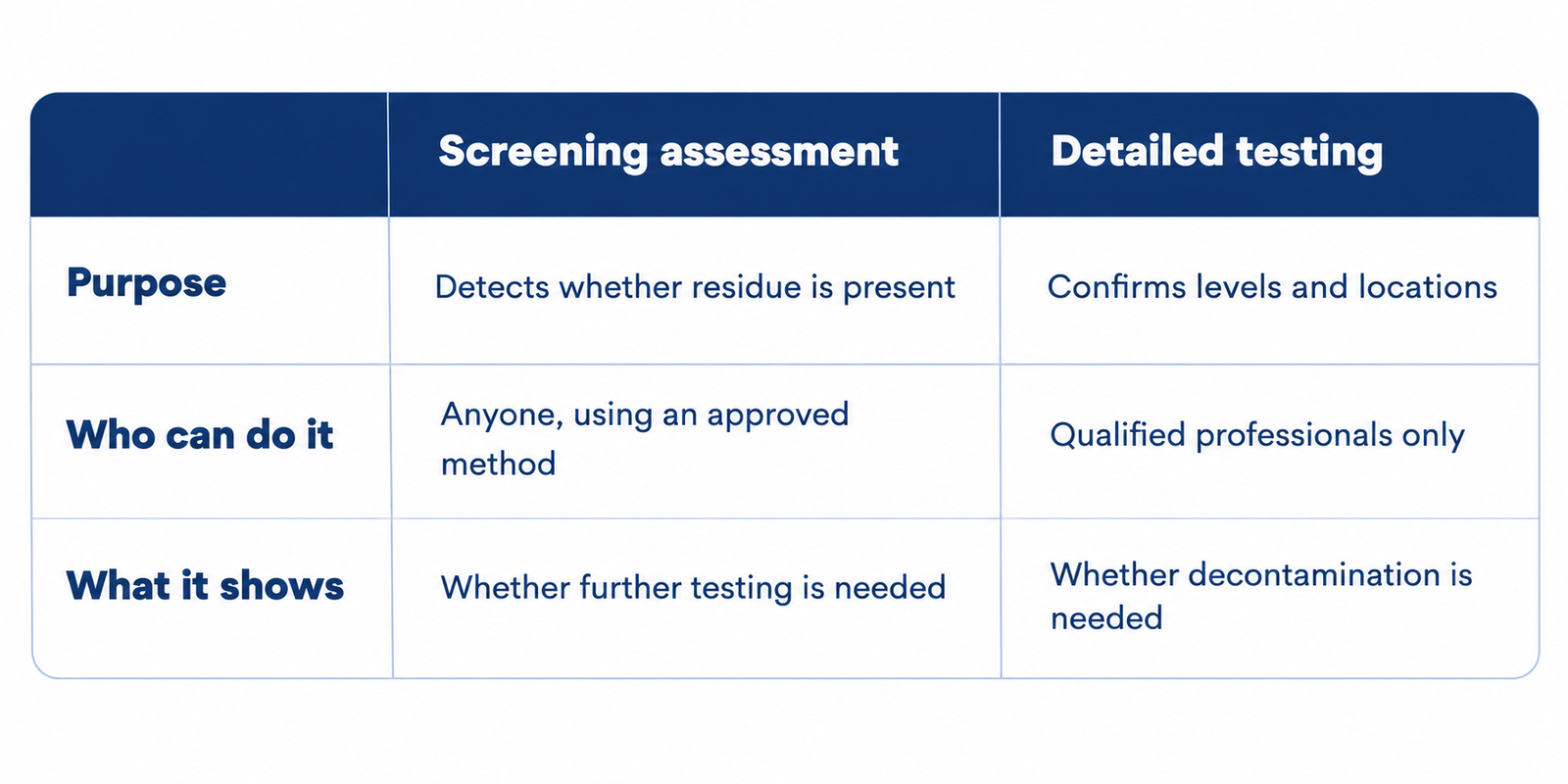
Approved methods include individual sampling, laboratory composite testing and validated screening kits. Field composite tests and unvalidated kits aren’t approved.
If you test during a tenancy, the notice and disclosure rules covered later in this guide apply.
How to Choose a Suitable Meth Testing Provider
Before you buy a kit or hire someone, confirm the testing will meet the regulations. These checks help:
- Qualifications: ask what qualifies them to carry out detailed testing.
- Approved methods: ask which testing method they use, and check it’s on the approved list.
- Independence: the people who carry out detailed testing can’t be the same people who decontaminate the same property.
- Laboratory: ask who analyses the samples and how long results take.
- Written report: the report should show results by room and sampling location, and name the method and tester.
How Does the Meth Decontamination Process Work?
Meth decontamination has to follow the process in the 2026 Regulations. It’s based on Section 4 of NZS 8510:2017, adjusted for the 15 µg/100 cm² level. You can do it yourself or hire a professional to manage it. If you’re not sure you can meet the standard, use a qualified professional.
Step 1 — Review the Testing Results
Start with the detailed testing report. Identify which rooms or areas are above 15 µg/100 cm² and whether anything is above 30. Check what the report says about the affected materials. If anything is unclear, ask the tester to explain it before you plan any work.
Step 2 — Plan the Decontamination Work
Decide who will carry out the work and get a written scope. If the property is tenanted, give the correct notice before you or your contractors enter. Tenants don’t have to move out, but you should discuss possible relocation and any rent reduction, and record what you agree in writing. Plan for soft furnishings too, because the rules for them differ depending on whether they can be cleaned.
Step 3 — Clean or Remove Contaminated Materials
Meth decontamination cleaning in NZ has to follow the prescribed process, not ordinary household cleaning. Some specific requirements apply:
- Light fittings and installed heaters must be cleaned as thoroughly as possible.
- Landlord-provided carpets, curtains and other soft furnishings in the contaminated area that can be cleaned and will stay in the property must be HEPA filter vacuumed and steam cleaned.
- Soft furnishings that can’t be cleaned, such as couches or mattresses, must be removed and replaced.
Within the prescribed process, a professional will tailor the decontamination methods to the materials and the extent of contamination. That’s one reason to get a written scope of work before anything starts.
Step 4 — Arrange Post-Decontamination Testing
After the work, a qualified professional must carry out detailed testing again. The aim is to confirm levels are no longer above 15 µg/100 cm². If they are, more decontamination and testing rounds are needed.
Step 5 — Confirm the Property Meets Applicable Requirements
Once the report shows every area at or below 15 µg/100 cm², the property meets the legal contamination level. Keep the report and the supporting records. Re-let the property only after that confirmation, because you must not knowingly rent out a property that’s still contaminated.
How Much Does Meth Decontamination Cost in NZ?
Tenancy Services doesn’t publish prices for meth testing or decontamination. Costs depend on the property and the work needed, so get written quotes. The figures below come from providers’ published pricing and may not reflect current quotes.
Meth Testing Costs vs Decontamination Costs
Testing and decontamination are separate expenses:
- Screening assessments: published prices start at around $199 to $249 plus GST for a typical home, rising with the number of rooms.
- Detailed testing: usually charged per sample or per room. Some providers publish rates of around $99 to $119 plus GST per sample.
- Decontamination: some NZ providers indicate costs from around $10,000 for minor contamination to well over $100,000 for severe cases. These are provider estimates, not official benchmarks.
What Factors Affect Meth Decontamination Costs?
Quotes vary because each property is different. The main factors are:
- The size of the property and the number of affected areas
- The extent of contamination
- Cleaning requirements and the replacement of materials that can’t be cleaned
- Professional assessment and post-decontamination testing
- Additional repairs and waste handling, where they apply
Does Landlord Insurance Cover Meth Decontamination?
It depends on your policy. Some policies cover meth-related damage only in specific situations, and others limit or exclude it. Check the policy wording, the exclusions, the excess and any requirements for notifying your insurer or providing test evidence.
Don’t assume you’re covered. Speak to your insurer before you start testing or work, because approval and reporting requirements vary. Tenancy Services also recommends speaking to your insurer, if you have cover, before taking a meth-related matter to the Tenancy Tribunal.
How Can Landlords Plan for Unexpected Decontamination Costs?
A few habits reduce the financial shock:
- Get written quotations, and compare what’s included.
- Keep testing reports and invoices together.
- Ask your insurer early whether a claim is possible.
- Include a contingency in your yearly rental property expenses.
Tenants can be liable for meth damage caused by them or their guests, but liability depends on the evidence, including the condition of the property before the tenancy started.
What Are a Landlord’s Responsibilities Under NZ Law?
Meth contamination in rental properties is covered by the Residential Tenancies Act 1986 and the 2026 Regulations. Most of the duties fall on landlords.
Providing a Safe and Compliant Rental Property
Landlords must not knowingly rent out a property contaminated with meth. They must decontaminate it before renting it out. If a tenanted property turns out to be contaminated, the landlord can continue the tenancy only while the property is being decontaminated.
Renting out a contaminated property may breach the Residential Tenancies Act. It may also breach other laws, such as the Building Act 2004 and the Health Act 1956. These duties sit alongside your wider landlord responsibilities in NZ.
Informing Tenants About Meth Contamination
If there are existing tenants, you must give them test results within 7 days of receiving them. You also have to give the correct notice before entering the property to test. Tenancy Services provides letter templates for landlords and tenants, which help you cover the required information.
Tenant Access, Decontamination and Temporary Relocation
Landlords must give the correct notice before they or their contractors enter to decontaminate. Tenants aren’t required to move out while the work is under way. If you agree on temporary relocation or a rent reduction, record it in writing.
Every case turns on its own facts, so avoid assuming a tenancy can simply be ended. If you’re unsure, check the official guidance or get independent advice.
Keeping Testing and Decontamination Records
Keep a record of each stage:
- Screening and detailed test reports
- The testing method and who carried it out
- Decontamination scopes, invoices and completion reports
- Post-decontamination test results
- Dates, notices and communications with tenants and your insurer
If a dispute reaches the Tenancy Tribunal, these records help show when testing and decontamination happened. A baseline test from before the tenancy can also help show the property’s earlier condition.
What Happens If a Landlord Does Not Follow the Rules?
Landlords who don’t meet the notification and disclosure obligations may be liable for exemplary damages of up to $7,200. In some situations, pecuniary penalties of up to $50,000 may apply. Disputes can also go to the Tenancy Tribunal, for example over terminating a tenancy or payment for testing and decontamination.
What Should Landlords Do After Meth Decontamination?
The work isn’t finished when the cleaners leave. A few follow-up steps protect you for the next tenancy.
Review the Final Testing Report
Check that every area is at or below 15 µg/100 cm². Read the report properly, not just the summary. If anything is unclear, ask the professional to explain before you sign off.
Keep Documentation for Future Reference
Add the final report, invoices and notices to your property file so they’re easy to find. Label them clearly and keep digital copies. You may need them for a future dispute, an insurance claim or a sale.
Prepare the Property Before Re-Renting
Confirm the property meets the requirements, then replace or repair anything that was removed. A baseline screening assessment before the next tenancy starts can document the property’s condition. A consistent tenant screening process also helps you choose the right tenants for the home.
Update Property Management Procedures
Use what you learned to tighten your routine. Regular inspections, clear reporting and prompt maintenance make problems easier to spot early. Our rental property inspection checklist is a good starting point.
Frequently Asked Questions About Meth Decontamination NZ
How Much Does It Cost to Decontaminate a Meth House in NZ?
The meth decontamination cost in NZ varies widely. It depends on the size of the property, how far contamination has spread and which materials need replacing. Testing is a separate cost. Get written quotes and speak to your insurer. See the cost section above for published testing prices and provider estimates.
How Long Does Meth Decontamination Take?
There’s no fixed timeframe for meth decontamination. It depends on the property’s condition, the affected materials and the testing schedule, because detailed testing has to be repeated after the work. Tenancy Services says contaminated premises must be decontaminated as soon as practicable.
What Are the Meth Contamination Levels in NZ?
A property is contaminated if any area is above 15 µg/100 cm², and those areas must be decontaminated until they’re at or below 15. It’s uninhabitable if any part is above 30 µg/100 cm². These levels have applied since 16 April 2026.
What Removes Meth Residue?
What removes meth residue depends on the surface or material, and the work has to follow the process in the 2026 Regulations. For example, soft furnishings that can be cleaned must be HEPA filter vacuumed and steam cleaned, while those that can’t be cleaned must be removed.
Can Landlords Clean Meth Residue Themselves?
Landlords can carry out decontamination themselves, but only by following the prescribed process. Ordinary cleaning isn’t a substitute. Detailed testing after decontamination must be carried out by a qualified professional to confirm levels are at or below 15 µg/100 cm². If you’re not sure you can meet the standard, hire a qualified professional.
Conclusion — Managing Meth Contamination in Rental Properties
Meth decontamination comes down to a few clear steps. Know when testing is required, use approved methods and qualified professionals, follow the prescribed decontamination process and confirm the result with detailed testing. Keep records throughout, and always check the current rules before you act.
At The Rental Specialists, we help landlords across Auckland and South Auckland, including Manukau and Manurewa, manage inspections, maintenance coordination and compliance. Learn more about our property management in Auckland, or contact us to talk through your rental property.
This guide is general information, not legal advice. Rules can change, so check the current guidance on Tenancy Services before making decisions about testing or decontamination.