What Does Property Management in East Auckland Include?
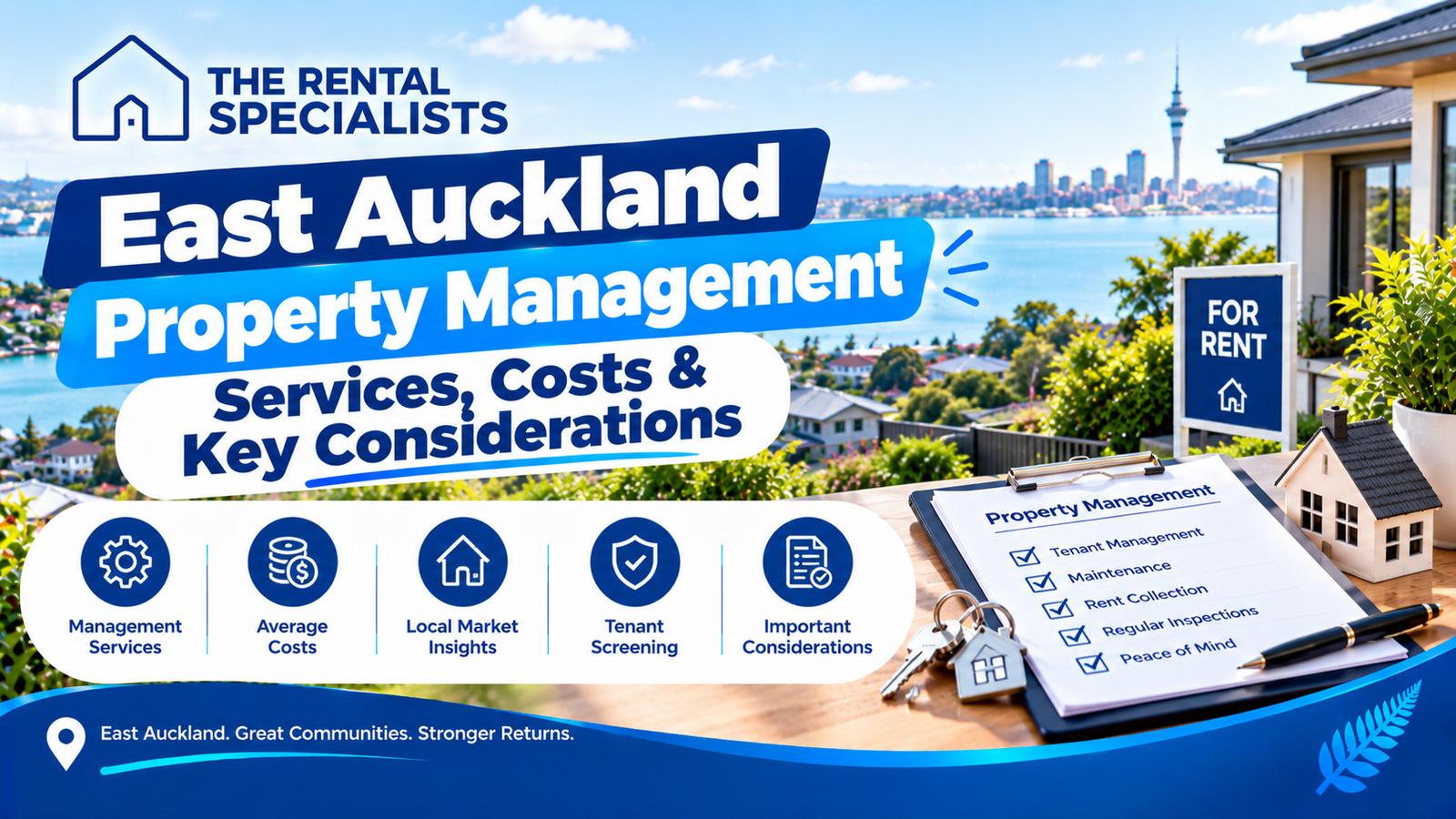
Owning a rental in the eastern suburbs is rewarding, but it takes more time than most landlords expect. Tenants call at odd hours. Repairs pile up. Compliance rules change. That’s why many owners look into East Auckland property management before they feel overwhelmed, not after.
A local property manager handles tenant selection, rent collection, maintenance and compliance on your behalf. You stay in control of the big decisions, and someone else deals with the daily work. The Rental Specialists supports Auckland landlords with this kind of service. This guide explains what to expect, how costs work and what to ask before you sign.
At a glance
- A manager looks after tenants, rent, inspections and maintenance for you.
- Fees vary, so compare what each quote includes, not just the percentage.
- Your rental’s type, condition and location all affect what it can earn.
- Landlords stay legally responsible, even when a manager handles the daily work.
Want to know what your property could rent for? Request a Rental Appraisal
What Does Property Management in East Auckland Include?
A good management service covers the whole tenancy, from the first advertisement to the final inspection. Here’s what that usually looks like in practice.
Rental Appraisals and Rent Reviews
Everything starts with the rent. A rental appraisal estimates what your property can realistically earn, based on comparable rentals and current market evidence. Set the rent too high and the home may sit empty. Set it too low and you lose income every week.
Rent reviews matter just as much, but the rules are strict. Rent can only increase once every 12 months, and the tenant must receive at least 60 days’ written notice. Your manager keeps track of these dates, so you don’t miss a review window or issue an invalid notice.
Tenant Selection and Tenancy Agreements
Choosing the right tenant is one of the biggest factors in a smooth tenancy. A property manager collects applications, contacts references and checks that the details add up. Our guide to tenant screening in NZ explains this process in more depth.
Once you’ve chosen a tenant, the manager prepares the tenancy agreement and keeps the paperwork in order. Good records also protect you if a question comes up later.
Rent Collection and Arrears Management
Rent should arrive on time, and you should know straight away when it doesn’t. Your manager tracks every payment and contacts the tenant quickly if something is overdue. They also keep clear records, so your statements and end-of-year figures are easy to follow.
Property Inspections and Maintenance
Routine inspections catch small problems before they turn into expensive ones. A leaking tap or a damp patch is far cheaper to fix early. Your manager records each inspection, passes on the findings and coordinates repairs with tradespeople. Tenants can report issues through a maintenance request form, which keeps everything documented in one place. For a closer look at what an inspection covers, see our rental property inspection checklist.
Which East Auckland Suburbs Do Landlords Need to Consider?
East Auckland isn’t one uniform market. It brings together coastal areas, established family suburbs and newer developments, and each can behave differently when it comes to renting.
Howick, Cockle Bay, Half Moon Bay and Bucklands Beach are coastal suburbs. Pakuranga and Highland Park are longer-established areas. Botany Downs and Dannemora include a mix of older homes and newer builds, while Flat Bush has seen plenty of recent development.
A single rent figure rarely fits the whole region. A townhouse in one suburb and a standalone home in another can attract different tenants and different rent levels. Before your appraisal, check these four things:
- Property type: standalone home, townhouse or unit.
- Parking and access: off-street parking, shared driveways or shared entrances.
- Condition: heating, insulation, ventilation and the state of the kitchen and bathroom.
- Comparable rentals: similar homes advertised on your street or in nearby streets, not just your postcode.
That’s why local knowledge matters. A manager who works in the area knows which comparable rentals are relevant to your property. If you’re also weighing up other parts of Auckland, see our guides to property management in Manukau, property management in Manurewa and Auckland City property management.
How Much Does Property Management Cost in East Auckland?
Fees vary from one company to the next, and the headline number rarely tells the whole story. Our separate guide to property management fees in NZ covers the details, so this section focuses on how to read a quote.
Common Property Management Fees
Most agreements include some combination of the following:
- An ongoing management fee, usually charged as a percentage of the rent collected.
- A letting fee, charged to the landlord, when a new tenancy starts. Tenants cannot be charged letting fees.
- Inspection fees, either included or charged separately.
- Extra administration or maintenance-related charges, where they apply.
Not every company charges every fee. Some bundle services into one rate, while others itemise them. That’s why a quote that looks cheap at first can cost more once the extras appear.
How to Work Out Your Yearly Cost
You can estimate the ongoing cost yourself with a simple formula:
Weekly rent × 52 × management fee percentage = yearly management fee
Then add the letting fee, any inspection fees and other charges from the quote. Also check whether the percentage is quoted with or without GST, because the difference adds up over a year. This gives you a like-for-like figure to compare across companies.
What Should You Look for in an East Auckland Property Manager?
Fees matter, but they’re only part of the decision. The right manager also makes your life easier, and that comes down to a few practical things.
Questions to Ask Before You Sign
Ask each company these questions, and get the answers in writing:
- Services: What does the quoted fee cover, and what costs extra?
- Fees: Can I see a written fee schedule, including letting and inspection fees?
- Repairs: What is the maximum the manager can spend without my approval?
- Communication: Who will be my main contact, and how quickly do you reply?
- Reporting: How often will I receive financial statements and inspection reports?
- Screening and compliance: How do you screen tenants, record inspections and keep up with tenancy rules?
- Contract: What is the contract term, and what are the notice and exit terms?
If a company is vague about any of these before you sign, treat it as a warning sign.
How to Compare Property Management Quotes
Use this table to line up quotes side by side.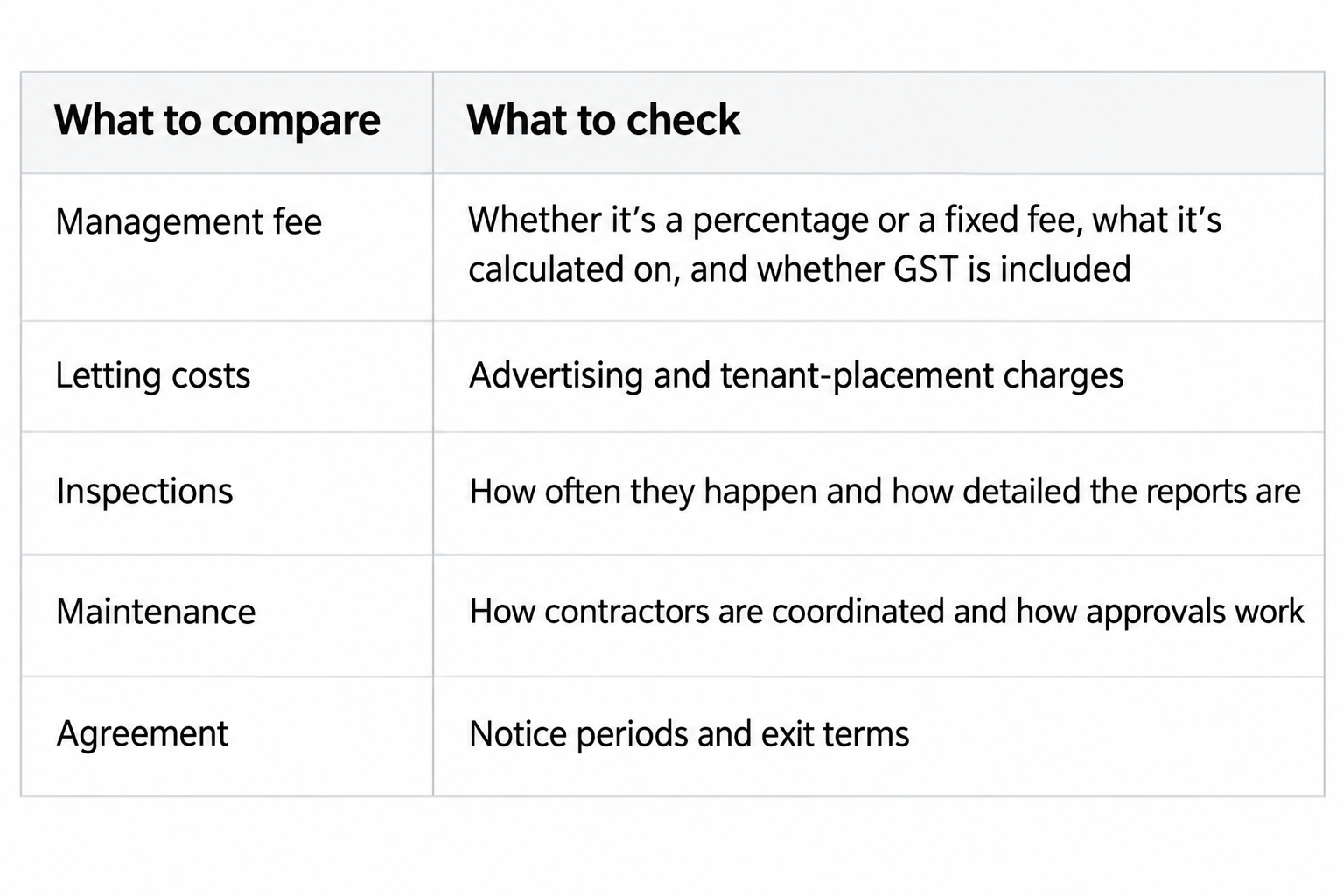 Then compare like with like.
What Rental Compliance Responsibilities Should Landlords Understand?
Compliance is one of the main reasons landlords hand over management, and you stay legally responsible even when a manager handles the daily work. Under the Residential Tenancies Act 1986, you need a written tenancy agreement, working smoke alarms and good records of inspections and repairs. All rental homes must also meet the Healthy Homes Standards, which cover heating, insulation, ventilation, moisture and drainage, and draught stopping. Some properties may qualify for exemptions, so confirm what applies to yours.
Rules change, so check current requirements with Tenancy Services. For more detail, see our guides to smoke alarm requirements for NZ landlords and our landlord guide.
Is Professional Property Management Right for Your Rental Property?
It depends on your time, your experience and how much you can take on alongside work and family. Self-managing gives you full control, but you also handle tenant calls, repairs, inspections and compliance yourself. A management company takes on that daily workload in return for fees. The real question is whether the time and service you receive are worth the cost.
Be honest about which approach suits you. Our guide to self-managing vs a property manager in Auckland compares both options in more detail.
Frequently Asked Questions About East Auckland Property Management
Q1. Do townhouses and units need different management from standalone homes?
They can. Units and townhouses may involve shared driveways, shared entrances or building rules, so ask how your manager handles access and communication with the building. Appraisals also differ, because comparable rentals for a unit are not the same as those for a standalone home.
Q2. Can tenants be charged a letting fee?
No. Letting fees cannot be charged to tenants in New Zealand. If a letting fee applies, it is charged to the landlord, so check it in your quote.
Q3. How often can I increase the rent?
Rent can only increase once every 12 months, and the tenant must receive at least 60 days’ written notice. Your manager can track these dates and prepare the notice.
Q4. Can I change my property management company?
Yes. Check the termination terms in your current agreement first, particularly the notice period. Your new manager can usually help with the handover, and your tenants will need updated contact details.
Q5. Am I still responsible for compliance if I hire a manager?
Yes. A manager handles the daily tasks and helps you stay on track, but you remain the landlord. Make sure the agreement spells out who does what.
Find the Right East Auckland Property Management Support
Choosing East Auckland property management comes down to three things: what’s included, what it costs in total and how clearly the company communicates. Compare written quotes like for like, and look beyond the headline percentage. Before you sign, check how a manager handles tenant screening, inspections, reporting and compliance.
The Rental Specialists looks after marketing, tenant screening, rent collection, maintenance coordination, routine inspections and compliance for Auckland landlords. If you’d like to know what your rental could earn, request a free rental appraisal. You can also contact our team or message us on WhatsApp.