
Your tenant will live in one of your biggest assets, so who you choose matters. Landlord due diligence and tenant vetting help you make that choice using facts rather than first impressions. A careless decision can lead to unpaid rent, property damage or a drawn-out dispute. At the same time, New Zealand landlords must balance careful selection with privacy and anti-discrimination obligations. This guide explains the laws that apply, a four-stage process and the questions you can and can’t ask. The Rental Specialists is an Auckland property management company that supports landlords with their rentals.
Why Landlord Due Diligence Matters in New Zealand
Careful checks help you make informed decisions before you hand over the keys. They help you to:
- Review rental history. How a person has treated previous tenancies is one of the most relevant things you can learn.
- Reduce avoidable risk. Rent arrears, property damage and unresolved disputes can affect your income and your property’s condition.
- Set written criteria first. Decide what matters, such as rental history, references and ability to pay rent, before you review applications. This keeps decisions consistent and helps you avoid discrimination.
- Create a clear record. Written notes on how you assessed each applicant show that your process was fair.
- Meet insurer expectations. Some landlord insurance policies may ask for evidence of tenant checks. Requirements vary by insurer, so read your policy.
Accepting a tenant without completing the relevant checks can create risks you could have avoided.
NZ Laws That Apply When You Choose a Tenant
Privacy Act 2020 and Responsible Information Collection
The Privacy Act 2020 lets you collect personal information only where it is necessary for a lawful purpose, which here means choosing a suitable tenant. The Privacy Commissioner’s rental guidance for landlords explains that information should be collected in stages. You ask for more detail only as an applicant moves from enquiry to application to shortlist. The Commissioner has also warned that bank statements showing how someone spends their money are generally unreasonably intrusive, so collect the minimum you need.
Under the Information Privacy Principles, tell applicants why you are collecting their information, how you will use it and who may receive it. Applicants can also ask to see and correct their personal information.
Human Rights Act 1993 and Fair Tenant Selection
Landlords must not discriminate against applicants on grounds protected by the Human Rights Act 1993. These include ethnicity, religion, disability, age, sex, pregnancy, family status and sexual orientation. Base your decision on relevant, consistent criteria, such as rental history, references and ability to pay rent, not personal assumptions.
Residential Tenancies Act and Tenancy Services Guidance
The Residential Tenancies Act 1986 sets out the rights and duties of landlords and tenants. Tenancy Services provides a pre-tenancy application form and practical guidance on choosing a tenant. Its guide suggests gathering the information you need, asking for consent to a credit check, checking references and, if you wish, asking whether applicants have been to the Tenancy Tribunal. Read its guide to choosing the right tenant.
The Four-Stage Tenant Vetting Process in NZ
Stage 1: Property Viewing and Initial Enquiry
Collect only the applicant’s name and contact details. You don’t need a full application before a viewing. Explain the property’s features, the rent, the tenancy terms and any conditions. Notice how clearly the person communicates, but treat first impressions as a starting point, not proof of suitability.
Stage 2: Completing the Rental Application
Once someone decides to apply, you can ask for relevant information:
- Proof of identity
- Confirmation that the applicant is aged 18 or older
- The number of people who will live at the property
- Pet or smoking information, where the property has restrictions
- Rental history
- Contact details for landlord and non-landlord referees
Obtain consent to contact referees and carry out the relevant checks. Include a short privacy statement on your pre-tenancy application form, explaining why you collect the information, how you will use it and who may receive it.
Stage 3: Shortlisting and Background Checks
Carry out further checks only on preferred applicants, when you are seriously considering an offer.
- Credit check: Run this only on your preferred applicant, with their consent. A credit report is one input into your judgement, not the whole decision.
- Tenancy Tribunal history: Look at any previous involvement and its context. An earlier case doesn’t automatically make someone unsuitable, so ask the applicant to explain.
- Criminal record check: Consider this only where it is genuinely relevant to the tenancy decision and the applicant has consented. Collect no more than you need.
- Ability to pay rent: Use a credit report plus one other suitable form of evidence, such as a payslip, an employer letter or proof of previous rent payments. Don’t ask for detailed bank statements showing individual spending.
Stage 4: Reference Verification and Final Selection
Ask applicants for two referees, ideally including a current or previous landlord. Tenancy Services suggests asking about behaviour, such as whether the tenant reported maintenance needs and returned calls promptly. Ask every referee the same tenancy-related questions, verify details where you have a reasonable concern and compare applicants against the same written criteria. Then document how you reached your decision.
Useful reference questions include:
- Was the rent generally paid on time?
- Did the tenant report maintenance issues appropriately?
- Was the property kept reasonably clean and tidy?
- Were there any unresolved tenancy issues?
- Would you rent to this person again, and why?
For more on checks and references, see our guide to tenant screening in NZ.
What Landlords Can and Cannot Ask Applicants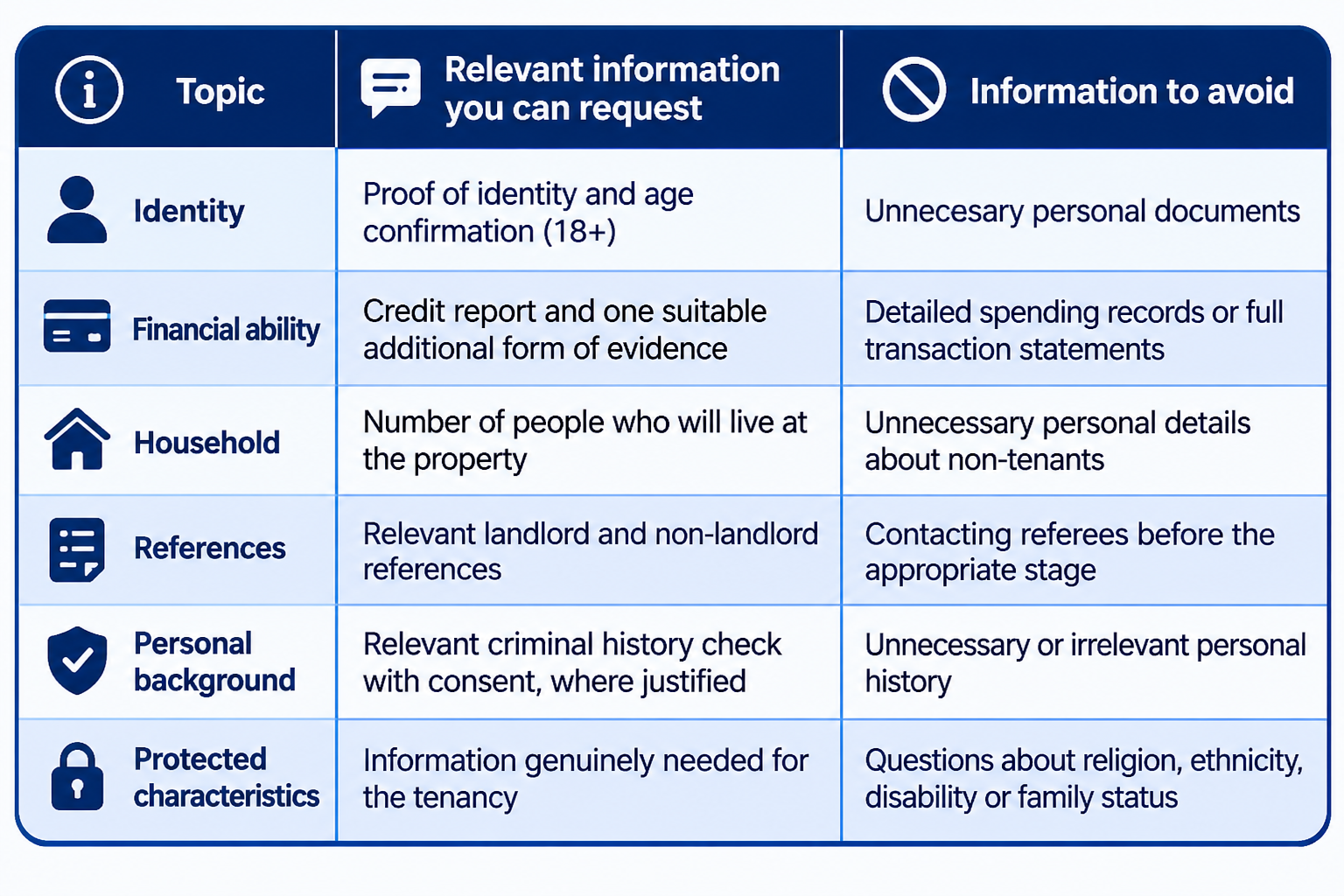
This table is a practical summary, not a complete legal test. What you can ask depends on the stage of the application and the purpose for collecting the information.
Five Warning Signs Landlords Should Investigate
A warning sign is a reason to ask more questions, not a reason to reject someone automatically.
- Unclear identity information: details don’t match, or identity documents can’t be verified.
- Inconsistent rental history: dates, addresses or explanations differ between the application and the references.
- Unverifiable references: referee details can’t be confirmed, or the referee can’t explain their relationship with the applicant.
- Unclear financial information: the evidence doesn’t sufficiently show the applicant can meet the rent.
- Incomplete consent or verification: the applicant doesn’t provide the authorisation needed for the relevant checks.
Give applicants a chance to clarify any inconsistency. Then decide using the evidence, not assumptions.
Privacy and Record Keeping After You Choose a Tenant
Your responsibilities don’t end when the tenancy agreement is signed.
- Keep only the information that is necessary for the tenancy and your lawful business purposes.
- Store application forms, reference notes and check results securely, and limit access to the people who need them.
- If you proceed with a tenancy after a credit report, keep a copy. The tenant has the right to ask to see it.
- Securely dispose of unsuccessful applicants’ information once you no longer need it.
- Don’t share applicants’ details or keep informal blacklists, because these breach the Privacy Act.
- Respond to requests from applicants to access or correct their personal information.
Doing It Yourself vs Using a Property Manager
Screening yourself gives you full control, but it takes time. You’ll need to review applications, verify referees, arrange checks, obtain consent and keep records for every applicant.
A property manager can coordinate these steps. Agreements differ, so confirm exactly which screening services are included. Our landlord guide explains your options, and our casual letting page covers help at the letting stage only.
Common Questions About Tenant Vetting in NZ
Q1. What checks should a landlord carry out before selecting a tenant?
Look at rental history, relevant references, a credit check (with consent) and evidence of ability to pay rent. Apply the same checks to every applicant, and carry out the later checks only on shortlisted applicants.
Q2. Can a landlord ask for bank statements in New Zealand?
Detailed transaction statements are generally unnecessary. Ask for a credit report plus one other form of evidence, such as a payslip or an employer letter.
Q3. Can landlords check a tenant’s criminal record in NZ?
Only with the applicant’s consent and only where it is relevant to the tenancy decision. Do it at the shortlisting stage.
Q4. Can a landlord reject someone because of a previous Tenancy Tribunal case?
Not automatically. Consider the context and how the applicant explains it. A fair decision weighs all the relevant evidence.
Make Informed Tenant Selection Decisions
A consistent vetting process protects your property and treats applicants fairly. Follow the Privacy Act and the Human Rights Act, collect information in stages and keep clear records of how you decided. Careful checks won’t remove every risk, but they help you make better-informed choices.
Want support selecting the right tenant for your Auckland rental? Explore our property management services in Auckland, request a free rental appraisal or contact The Rental Specialists.
This guide is general information, not legal advice. Check current guidance from Tenancy Services and the Privacy Commissioner before you act.