
If you’re renting with a pet in New Zealand, the short answer is this: a landlord can charge a pet bond of up to 2 weeks’ rent, and only 1 pet bond is allowed at a time, no matter how many pets you have. This applies on top of your general tenancy bond, and the exact amount can vary depending on your weekly rent, whether you’re renting in Auckland or elsewhere in the country.
This guide walks through how the pet bond is calculated, how it compares to the general bond, when it can be charged, how it’s paid and lodged, and what happens when it’s time to get it back.
How Much Is a Pet Bond in NZ?
The maximum pet bond a landlord can charge is 2 weeks’ rent. This is an additional bond on top of the general tenancy bond, not a replacement for it.
Importantly, 2 weeks’ rent is a ceiling, not a fixed requirement. A landlord may choose to charge less, or in some cases not charge a pet bond at all, depending on the pet and the agreed conditions. This applies the same way whether you’re renting in a smaller town or looking at Auckland rental properties, where weekly rents, and therefore pet bond amounts, tend to be higher.
How Do You Calculate a Pet Bond?
The formula is straightforward:
Weekly rent × 2 = Maximum pet bond
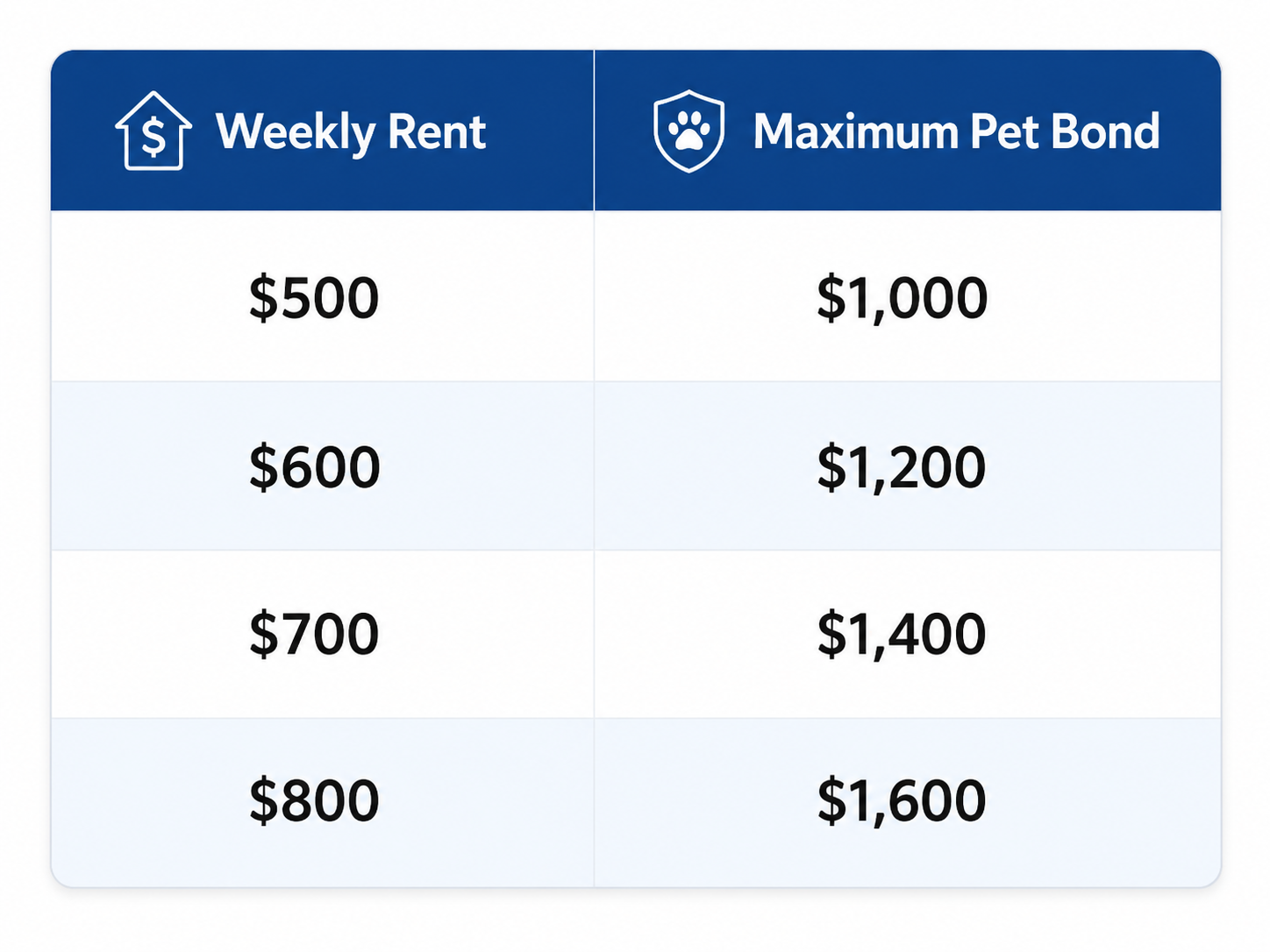
This pet bond calculation applies regardless of location, though Auckland rent tends to sit higher on this scale compared to the national average.
Note: These are maximum figures based on 2 weeks’ rent. The actual pet bond amount can vary depending on the property’s location, the landlord’s decision, and the weekly rent, a landlord may choose to charge less than the maximum.
Can a Landlord Charge the Full Two Weeks’ Rent?
Not necessarily. Two weeks’ rent is the legal maximum, not a mandatory amount. A landlord can set a reasonable pet bond as one of the conditions attached when giving consent for a pet, and that figure can sit anywhere from zero up to the two-week cap.
What Is a Pet Bond and Why Is It Charged?
A pet bond exists to give landlords some protection against pet-related damage, while still allowing tenants with pets fair access to rental housing. Tenants are liable for all pet-related damage beyond fair wear and tear, and the pet bond acts as security against that risk.
It sits alongside the tenant’s general responsibilities under the tenancy agreement, maintaining the property’s condition, respecting approved pet conditions, and keeping the landlord informed if anything changes.
What Does a Pet Bond Cover?
A pet bond is used to cover any pet-related damage that is more than fair wear and tear. That might include damage to carpets or flooring caused by a pet, or other repair costs tied specifically to keeping the animal at the property. It isn’t intended to cover general property damage unrelated to the pet, that falls under the general bond instead.
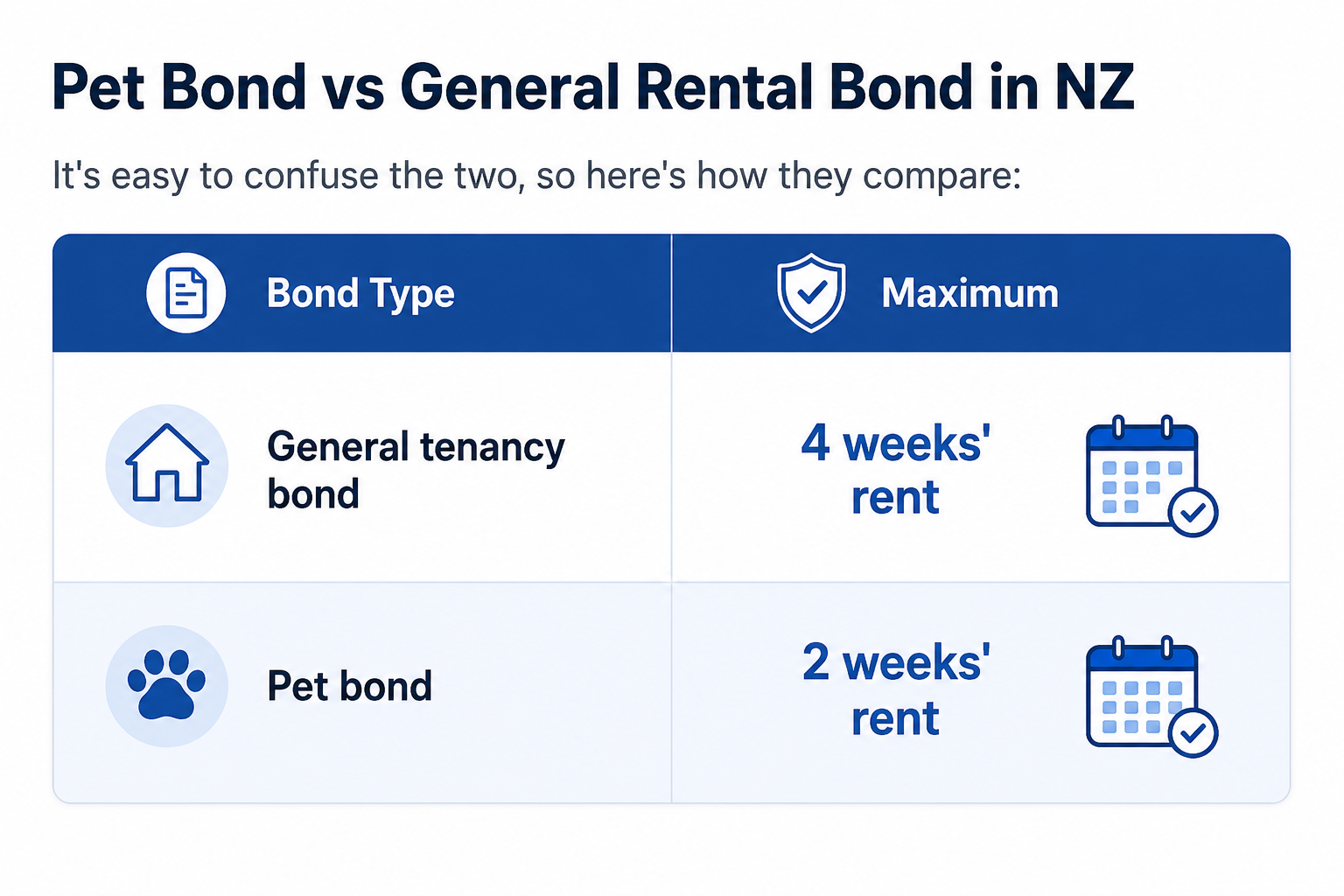
The pet bond is charged in addition to the general bond, not instead of it. Together, they form the total bond a tenant with a pet may be asked to pay.
How Much Bond Could an Auckland Tenant Pay?
Here’s a realistic example based on Auckland rental pricing:
- Weekly Auckland rent: $650
- General bond: up to $2,600 (4 weeks’ rent)
- Pet bond: up to $1,300 (2 weeks’ rent → $650 × 2)
- Total possible bond: $3,900
For Auckland landlords and tenants, this combined total is worth keeping in mind when budgeting for a pet-friendly rental home, since it represents the maximum amount that could be requested upfront, not what every landlord will actually charge.
When Can a Landlord Charge a Pet Bond?
Pet Consent Must Be Given
A pet bond can only be charged where the landlord has given consent for the pet. The process generally works like this: the tenant requests permission to keep a pet, the landlord considers the request, and if consent is given, reasonable conditions can be attached, with a pet bond being one possible condition.
Which Pets Are Covered by the New Rules?
These provisions took effect on 1 December 2025, introducing tenants who can keep a pet if their tenancy agreement allows it, or with written consent from the landlord. Disability assistance dogs are excluded from these pet consent and pet bond requirements. Permission is not needed and a pet bond cannot be charged for these dogs.
It’s also worth noting that tenants with lawful pets at their rental properties at the time these new rules come into effect do not need to ask their landlords again for pet consent, and landlords cannot ask for pet bonds or introduce conditions for these existing pets.
Can a Landlord Charge a Pet Bond for Every Pet?
No. Landlords can only charge 1 pet bond per tenancy, meaning if a tenant got consent for 2 or more pets, only 1 pet bond can be charged. The bond doesn’t multiply per animal.
How Much Is a Pet Bond for a Rental in Auckland?
The rules themselves don’t change based on location, Auckland pet bonds follow the same national framework. What does change is the dollar amount, since Auckland rental property rents tend to run higher than many other regions.
For Auckland landlords offering pet-friendly rentals, this typically means slightly higher pet bond figures for tenants keeping cats or dogs, alongside the same requirements around pet consent, rental conditions, and property inspections that apply everywhere else in the country.
What Happens When a Pet Causes Damage?
Pet Damage vs Fair Wear and Tear
Not all marks or deterioration in a rental count as pet damage. Normal, gradual wear from everyday living is treated differently from damage directly caused by keeping a pet, scratched flooring, stained carpet, or odour that requires professional cleaning or replacement, for example.
Who Is Responsible for Pet-Related Damage?
Responsibility falls on the tenant. Tenants are fully liable for pet-related damage beyond fair wear and tear, including accidental or careless damage. Landlords may claim against the general bond, the pet bond, or both, following the usual evidence and Tribunal processes. This is typically assessed during property inspections and at the end-of-tenancy check.
Can a Pet Bond Be Increased When Rent Goes Up?
Yes. Landlords can require a bond top-up if the rent increases. This applies to both general and pet bonds. The top-up follows a lawful rent increase and written notice, and the maximum pet bond remains capped at 2 weeks’ rent based on the new rental amount.
Pet Bond Top-Up Example
- Original rent: $600/week → Pet bond: $1,200
- Rent increases to $650/week → Maximum pet bond becomes $1,300
- Possible top-up: $100
How Is a Pet Bond Paid and Lodged?
The general process looks like this:
- The tenant requests to keep a pet.
- The landlord gives consent.
- A pet bond condition is agreed (if applicable).
- The tenant pays the bond.
- The landlord provides a receipt.
- The landlord lodges the bond with Tenancy Services.
The bond must be clearly identified as a pet bond in documentation and receipts, separate from the general bond, so both the tenant and landlord have a clear record of what’s been charged.
Can You Get a Pet Bond Back?
Yes. If a pet is no longer at the property, tenants can ask for the pet bond to be refunded. The refund typically depends on the property’s condition at the time, any outstanding pet-related damage, and agreement between landlord and tenant. Where there’s a dispute, either party can take the matter to the Tenancy Tribunal.
What Can Affect Your Pet Bond Refund?
A few things can reduce what’s returned:
- Pet-related property damage
- Cleaning costs tied to the pet
- Unpaid tenancy costs
- Evidence provided during the claim
- The inspection report
- Fair wear and tear (which cannot be claimed against)
What Happens If a Landlord Charges Too Much?
The maximum pet bond is fixed at 2 weeks’ rent. If a landlord charges more than 2 weeks’ rent, they could receive a penalty of up to $3,000. This cap exists specifically to prevent landlords from using the pet bond as a way to charge beyond what the law allows.
How Much Is a Pet Bond? Quick Examples

How Much Is a Pet Bond in NZ? FAQs
Q1. How much is a pet bond in NZ?
Up to two weeks’ rent, charged in addition to the general tenancy bond.
Q2. Is a pet bond separate from the general bond?
Yes. The general bond can be up to 4 weeks’ rent, while the pet bond is a separate, additional amount capped at 2 weeks’ rent.
Q3. Can a landlord charge two pet bonds?
No. Only one pet bond can be charged per tenancy, even if more than one pet has been approved.
Q4. Can landlords charge a pet bond in Auckland?
Yes. Auckland follows the same national tenancy rules as the rest of New Zealand, the two-week maximum applies regardless of region.
Q5. Can a pet bond be refunded?
Yes, generally once the pet is no longer living at the property, provided there’s no outstanding pet-related damage or dispute.
Q6. Can pet bonds increase when rent increases?
Yes, through a top-up following a lawful rent increase, though the total still can’t exceed 2 weeks of the new rent amount.
Q7. Can landlords charge a pet bond for an assistance dog?
No. Disability assistance dogs are excluded from these pet consent and pet bond requirements, so permission is not needed and a pet bond cannot be charged for these dogs.
Managing Pet-Friendly Rental Properties in Auckland
For Auckland landlords, handling pet requests well involves more than just setting a pet bond figure. It typically includes careful tenant screening, clear pet approval documentation, regular property inspections, and ongoing maintenance to keep the rental property in good condition. Clear landlord communication throughout the tenancy, along with proper documentation if any damage occurs, helps keep the process straightforward for both sides.
This is often where professional property maintenance and consistent local rental property management make a practical difference, particularly for landlords juggling multiple pet-friendly rentals. If you’d like to support managing a pet-friendly Auckland rental property, our property management services team can help with everything from pet consent through to inspections and ongoing tenancy management.Have a quick question about your pet policy? Message us on WhatsApp.